
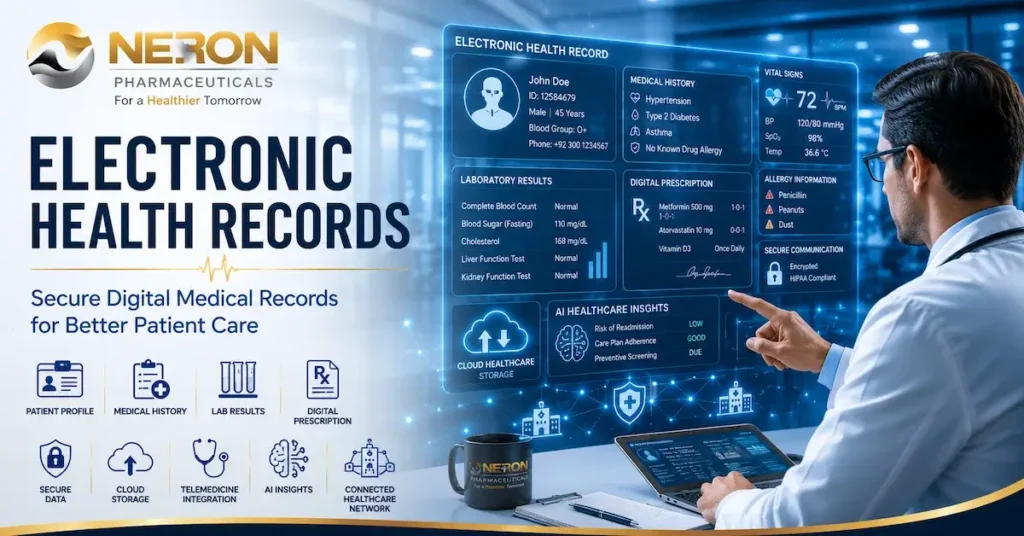
Electronic Health Records: Improving Patient Care Through Digital Medical Records
Electronic Health Records, commonly known as EHRs, are one of the most important foundations of modern digital healthcare. They replace traditional paper-based medical files with secure digital records that can be accessed, updated, and shared by authorized healthcare professionals. In today’s healthcare environment, where patients often receive care from multiple doctors, hospitals, laboratories, pharmacies, and specialists, electronic health records help create a more connected and efficient healthcare system.
As part of the wider modern healthcare transformation, electronic health records support better communication, improved clinical decision-making, safer prescribing, faster access to patient history, and more coordinated care. They are also closely connected to digital health, telemedicine, artificial intelligence, healthcare data analytics, and remote patient monitoring.
For healthcare organizations, EHR systems are not just digital filing cabinets. They are powerful clinical tools that help improve patient safety, reduce errors, support preventive care, and strengthen healthcare quality. For patients, they can make healthcare more convenient, transparent, and personalized.
What Are Electronic Health Records?
Electronic Health Records are digital versions of a patient’s medical history. They contain important health information that can be securely stored and accessed by authorized healthcare providers.
An EHR may include:
- Patient identification details
- Medical history
- Diagnoses
- Laboratory test results
- Imaging reports
- Medication history
- Allergy information
- Vaccination records
- Doctor consultation notes
- Treatment plans
- Hospital admission records
- Discharge summaries
- Prescription details
- Follow-up recommendations
Unlike paper records, electronic health records can be searched, updated, organized, and shared more efficiently. This helps healthcare professionals access the right information at the right time.
Why Electronic Health Records Matter in Modern Healthcare
Healthcare decisions depend on accurate and timely information. When a doctor does not have access to a patient’s complete medical history, the risk of delayed diagnosis, duplicate testing, medication errors, or incomplete treatment increases.
Electronic health records help solve this problem by creating a centralized digital record that supports better continuity of care. If a patient visits a specialist, laboratory, hospital, or pharmacy, important health information can be made available to authorized professionals when needed.
This is especially important for patients with chronic diseases, elderly patients, people taking multiple medicines, and individuals who require long-term monitoring.
How EHRs Improve Patient Care
Electronic health records improve patient care by making healthcare information easier to access, update, and understand. When healthcare professionals can quickly review a patient’s history, allergies, previous diagnoses, and medication records, they can make safer and more informed decisions.
EHRs improve patient care by supporting:
- Faster diagnosis
- Better treatment planning
- Improved medication safety
- Reduced duplicate tests
- Better follow-up care
- Improved chronic disease management
- More coordinated care between providers
- Better emergency care decisions
For example, if a patient arrives at a hospital emergency department, doctors can quickly review known allergies, current medications, previous illnesses, and recent test results. This helps reduce risk and supports faster treatment decisions.
EHRs and Medication Safety
Medication safety is one of the most important benefits of electronic health records. Many patients take multiple medicines, and some medicines may interact with each other or cause allergic reactions.
EHR systems can help healthcare providers review:
- Current medications
- Previous prescriptions
- Known drug allergies
- Possible drug interactions
- Dosage history
- Medication changes over time
This helps doctors and pharmacists reduce avoidable medication errors and improve patient safety. In modern healthcare, safe prescribing depends not only on medical knowledge but also on accurate access to patient information.
EHRs and Telemedicine
Electronic health records are strongly connected to telemedicine. During a virtual consultation, healthcare professionals need access to the patient’s medical history, previous reports, medication list, allergies, and treatment plan.
When telemedicine platforms are integrated with EHR systems, doctors can provide better virtual care. They can review patient records during the consultation, update notes, issue follow-up instructions, and maintain continuity between online and in-person visits.
This connection is especially useful for patients who require repeated follow-ups, chronic disease monitoring, or specialist consultations.
EHRs and Digital Health
Electronic health records are a key part of the broader digital health ecosystem. Digital health includes telemedicine, mobile health applications, wearable health technology, artificial intelligence, remote monitoring, and healthcare analytics. EHRs provide the central patient data foundation that many of these technologies rely on.
For example, wearable devices may collect heart rate, activity, sleep, or blood pressure data. Remote monitoring tools may track glucose levels or oxygen saturation. When this information is connected with electronic health records, healthcare professionals can see a more complete picture of the patient’s health.
Benefits of Electronic Health Records
Electronic health records provide benefits for patients, healthcare providers, hospitals, clinics, pharmacies, laboratories, and healthcare systems.
1. Faster Access to Patient Information
Doctors and healthcare staff can quickly access medical history, test results, prescriptions, and previous consultation notes. This reduces delays and improves clinical workflow.
2. Better Care Coordination
Patients often receive care from multiple healthcare professionals. EHRs help different providers stay informed and coordinated.
3. Reduced Duplicate Testing
When previous laboratory or imaging results are available digitally, unnecessary repeat testing can be reduced.
4. Improved Patient Safety
Access to allergy records, medication history, and previous diagnoses supports safer clinical decisions.
5. Better Chronic Disease Management
Patients with diabetes, hypertension, heart disease, respiratory illness, and other long-term conditions benefit from organized health records and ongoing monitoring.
6. Support for Preventive Healthcare
EHR systems can remind healthcare providers about vaccinations, screenings, follow-ups, and preventive care needs.
7. Improved Healthcare Efficiency
Digital records reduce paperwork, improve documentation, and support faster administrative processes.
Electronic Health Records and Healthcare Data
Modern healthcare depends heavily on data. Every consultation, prescription, laboratory test, imaging report, and treatment plan creates valuable health information. Electronic health records organize this information in a structured way.
When healthcare data is accurate and well-managed, it can support better clinical decisions, research, quality improvement, healthcare planning, and disease prevention strategies.
However, healthcare data must always be handled responsibly. Patient privacy, informed consent, cybersecurity, and data protection must remain central to every EHR system.
EHRs and Healthcare Analytics
Electronic health records also support healthcare analytics. When patient information is collected in a structured and secure way, healthcare organizations can identify patterns, measure outcomes, improve quality, and plan services more effectively.
Healthcare analytics can help identify:
- Common disease trends
- Medication usage patterns
- Hospital readmission risks
- Preventive care gaps
- Patient follow-up needs
- Population health challenges
This makes EHRs valuable not only for individual patient care but also for improving healthcare systems overall.
Challenges of Electronic Health Records
Although electronic health records offer many benefits, they also bring important challenges. Healthcare organizations must implement EHR systems carefully to ensure accuracy, security, usability, and patient trust.
Data Privacy and Security
Medical records contain highly sensitive personal information. EHR systems must use strong security measures to protect patient data from unauthorized access, cyberattacks, and misuse.
System Integration
Hospitals, laboratories, pharmacies, and clinics may use different digital systems. These systems need to communicate properly so patient information can move securely and accurately between healthcare providers.
User Training
Doctors, nurses, pharmacists, and administrative teams need proper training to use EHR systems effectively. Poor training can lead to documentation errors and workflow delays.
Data Accuracy
An electronic record is only useful if the information inside it is accurate and up to date. Healthcare professionals must ensure that records are properly maintained.
The Future of Electronic Health Records
The future of electronic health records will be more connected, intelligent, and patient-centered. Future EHR systems may integrate more deeply with artificial intelligence, wearable devices, remote monitoring tools, telemedicine platforms, and personalized medicine.
AI-assisted EHR systems may help healthcare professionals identify risks, suggest preventive care actions, flag possible medication issues, and support clinical decision-making. Patients may also gain easier access to their own health information through secure portals and mobile health applications.
As healthcare becomes more digital, electronic health records will remain a central foundation for safer, smarter, and more coordinated patient care.
Conclusion
Electronic Health Records are a vital part of modern healthcare. They improve access to patient information, support safer prescribing, strengthen care coordination, reduce unnecessary testing, and help healthcare professionals make more informed decisions.
As digital health, telemedicine, artificial intelligence, and remote monitoring continue to grow, EHRs will become even more important. They provide the secure data foundation needed for connected, efficient, and patient-centered healthcare systems.
For healthcare organizations and pharmaceutical companies, the continued development of digital medical record systems represents an important step toward improving healthcare quality, patient safety, and long-term health outcomes.
Frequently Asked Questions
What are Electronic Health Records?
Electronic Health Records are secure digital versions of a patient’s medical history, including diagnoses, prescriptions, laboratory results, allergies, treatment plans, and consultation notes.
Why are EHRs important in healthcare?
EHRs are important because they improve access to patient information, support safer clinical decisions, reduce medical errors, improve coordination, and help healthcare providers deliver better care.
How do EHRs improve patient safety?
EHRs improve patient safety by giving healthcare professionals access to allergy information, medication history, previous diagnoses, test results, and treatment records.
Are Electronic Health Records secure?
Electronic Health Records can be secure when healthcare organizations use strong cybersecurity measures, access controls, encryption, staff training, and privacy policies.
How are EHRs connected to telemedicine?
EHRs support telemedicine by giving doctors access to patient history, medications, allergies, reports, and treatment plans during virtual consultations.
Suggested Internal Links
Image ALT Text
Electronic Health Records supporting digital healthcare, telemedicine, patient data management, and modern medical care.