
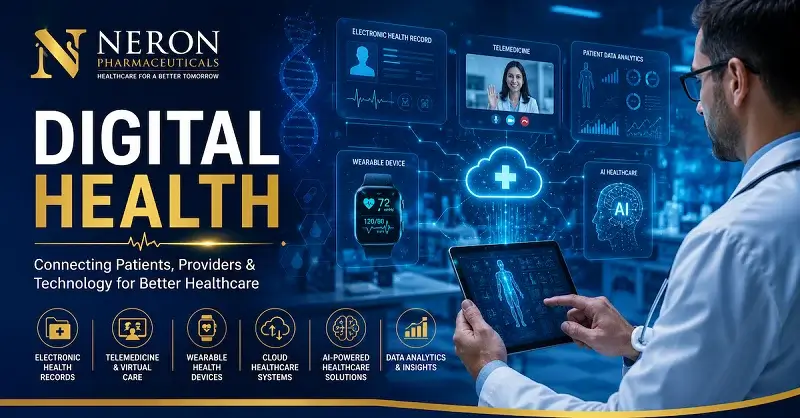
Digital Health: Transforming Healthcare Through Technology
Digital health is transforming the way healthcare is delivered, managed, and experienced. By combining modern technology with medical science, digital health enables healthcare providers to deliver more connected, efficient, and patient-centered care. From electronic health records and telemedicine to wearable devices and artificial intelligence, digital health is improving healthcare accessibility, enhancing clinical decision-making, and empowering patients to take an active role in managing their health.
As healthcare systems continue to evolve, digital technologies are becoming an essential component of modern healthcare. They support faster communication, better coordination between healthcare professionals, improved patient monitoring, and more informed medical decisions.
What Is Digital Health?
Digital health refers to the use of digital technologies to improve healthcare services, patient outcomes, disease prevention, medical research, and healthcare management.
Digital health combines healthcare with technologies such as:
- Electronic Health Records (EHRs)
- Telemedicine
- Mobile health applications (mHealth)
- Artificial Intelligence
- Wearable health devices
- Cloud computing
- Remote patient monitoring
- Healthcare data analytics
These technologies improve communication between healthcare providers and patients while making healthcare more efficient and accessible.
The Importance of Digital Health
Healthcare systems generate enormous amounts of clinical data every day. Digital health allows this information to be securely collected, stored, analyzed, and shared among authorized healthcare professionals. This improves care coordination, reduces medical errors, and supports evidence-based clinical decisions.
Digital health also increases access to healthcare services, particularly for people living in rural or underserved communities where specialist care may not always be available.
Electronic Health Records
Electronic Health Records (EHRs) replace paper-based medical files with secure digital records that can be accessed by authorized healthcare professionals.
Benefits include:
- Improved continuity of care
- Reduced duplicate testing
- Better medication management
- Faster access to patient history
- Improved communication between healthcare providers
Telemedicine
Telemedicine enables patients to consult healthcare professionals remotely using secure video calls and digital communication platforms.
Virtual consultations improve healthcare accessibility while reducing travel time, waiting periods, and unnecessary hospital visits.
Mobile Health Applications
Mobile health, commonly known as mHealth, includes smartphone applications that help patients monitor chronic conditions, manage medications, schedule appointments, track fitness goals, and access healthcare information.
These applications encourage greater patient engagement and promote healthier lifestyles.
Wearable Health Technology
Wearable devices such as smartwatches and medical sensors continuously monitor physiological information including heart rate, blood oxygen levels, physical activity, sleep quality, and blood pressure.
This information can be shared with healthcare providers to support early intervention and long-term disease management.
Artificial Intelligence in Digital Health
Artificial intelligence strengthens digital health by analyzing healthcare data, supporting medical diagnosis, identifying disease patterns, assisting clinical decisions, and improving pharmaceutical research.
AI helps healthcare professionals make faster and more informed decisions while maintaining high standards of patient care.
Cloud Computing in Healthcare
Cloud technology enables healthcare organizations to securely store and share medical information across hospitals, laboratories, pharmacies, and clinics.
Cloud-based systems improve collaboration while supporting healthcare research and data analysis.
Benefits of Digital Health
- Improved patient access to healthcare
- Better communication between providers
- Earlier disease detection
- Greater patient engagement
- Reduced healthcare costs
- Enhanced clinical decision-making
- Improved healthcare efficiency
- Better long-term disease management
Challenges of Digital Health
Despite its benefits, digital health presents several challenges including cybersecurity risks, patient privacy protection, technology adoption, digital literacy, regulatory compliance, and healthcare infrastructure limitations.
Healthcare organizations must ensure digital technologies remain secure, reliable, and accessible for all patients.
The Future of Digital Health
The future of digital health includes smarter hospitals, AI-assisted healthcare, personalized medicine, connected medical devices, predictive analytics, and more integrated healthcare systems. As technology continues to advance, digital health will play an increasingly important role in improving healthcare quality and patient outcomes.
Conclusion
Digital health is transforming modern healthcare by combining technology, data, and medical expertise to improve healthcare delivery. Through telemedicine, electronic health records, wearable devices, artificial intelligence, and connected healthcare systems, digital health is creating safer, more efficient, and more patient-centered healthcare for the future.
As healthcare innovation continues, digital health will remain a key driver of improved clinical outcomes, better patient experiences, and stronger healthcare systems worldwide.
FAQ
Q1. What is digital health?
Digital health is the use of digital technologies such as telemedicine, electronic health records, AI, wearable devices, and mobile applications to improve healthcare services and patient outcomes.
Q2. What are examples of digital health?
Examples include telemedicine, wearable health devices, electronic health records, mobile health apps, remote patient monitoring, and AI-assisted healthcare systems.
Q3. How does digital health improve patient care?
Digital health improves patient care through faster communication, continuous monitoring, better access to healthcare, improved diagnosis, and personalized treatment planning.
Q4. Is digital health secure?
Digital health systems can be highly secure when healthcare organizations implement strong cybersecurity measures, data encryption, and privacy regulations.
Q5. What is the future of digital health?
The future includes AI-powered healthcare, predictive analytics, smart hospitals, connected medical devices, personalized medicine, and more accessible healthcare services.