
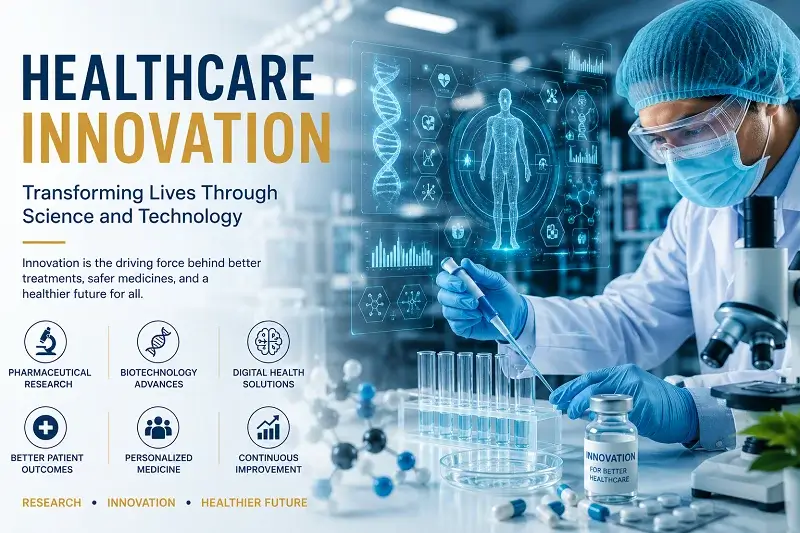
Healthcare has always evolved through scientific discovery. From the invention of vaccines and antibiotics to modern robotic surgery and artificial intelligence, innovation has continuously improved how diseases are prevented, diagnosed, treated, and managed. Today, healthcare innovation extends far beyond hospitals and laboratories. It encompasses digital technologies, pharmaceutical research, biotechnology, advanced diagnostics, personalized medicine, and new models of patient care that are transforming healthcare systems worldwide.
Innovation in healthcare is not simply about introducing new technologies. It is about developing better ways to improve patient outcomes, increase healthcare accessibility, enhance safety, reduce costs, and address the growing health challenges faced by modern societies.
Healthcare organizations, pharmaceutical companies, researchers, universities, technology firms, and regulatory authorities all contribute to an innovation ecosystem that continuously seeks safer, faster, and more effective healthcare solutions.
This article explores the importance of healthcare innovation, the technologies driving transformation, current challenges, future opportunities, and why continuous innovation remains essential for improving global health.
What Is Healthcare Innovation?
Healthcare innovation refers to the development and implementation of new ideas, technologies, treatments, processes, and healthcare delivery models that improve medical care and patient outcomes.
Innovation may involve:
- New medicines
- Medical devices
- Diagnostic technologies
- Artificial intelligence
- Digital healthcare platforms
- Pharmaceutical manufacturing improvements
- Biotechnology
- Hospital management systems
- Surgical techniques
- Preventive healthcare strategies
Unlike invention, innovation focuses on successfully applying new knowledge to solve real healthcare problems.
The ultimate objective is always improving patient care while making healthcare systems safer, more efficient, more affordable, and more accessible.
Why Healthcare Innovation Matters
Healthcare systems worldwide face increasing pressure due to several global challenges.
These include:
- Aging populations
- Rising chronic diseases
- Higher healthcare costs
- Antibiotic resistance
- Emerging infectious diseases
- Healthcare workforce shortages
- Limited healthcare access in rural communities
Innovation provides practical solutions to these challenges.
For example:
Artificial intelligence assists physicians in diagnosing diseases earlier.
Telemedicine connects specialists with patients living in remote locations.
Wearable health devices continuously monitor chronic conditions.
Biotechnology enables targeted treatments for previously untreatable diseases.
Digital platforms improve communication between healthcare providers and patients.
Types of Healthcare Innovation
Healthcare innovation occurs across multiple areas.
Pharmaceutical Innovation
Pharmaceutical companies invest heavily in research and development to discover new medicines and improve existing therapies.
Innovation includes:
- Drug discovery
- Vaccine development
- Novel drug delivery systems
- Personalized medicines
- Biosimilars
- Biotechnology
- Combination therapies
Modern pharmaceutical innovation has dramatically improved survival rates for many diseases that were once considered fatal.
Medical Technology Innovation
Read more https://neronpharma.pk/modern-healthcare/
Medical technology continues to evolve rapidly.
Examples include:
- MRI scanners
- CT imaging
- Robotic surgery
- Smart medical devices
- Portable diagnostics
- Point-of-care testing
- Advanced laboratory equipment
These technologies improve diagnostic accuracy while reducing treatment delays.
Digital Health Innovation
Healthcare has become increasingly digital.
Innovations include:
- Electronic Health Records
- Mobile health applications
- Telemedicine
- Remote patient monitoring
- Digital prescriptions
- Patient portals
- Cloud healthcare systems
These technologies improve healthcare efficiency while empowering patients to manage their own health.
Healthcare Process Innovation
Not every innovation involves technology.
Healthcare organizations also improve outcomes by redesigning workflows.
Examples include:
- Faster emergency care pathways
- Improved medication safety systems
- Better infection control protocols
- Lean hospital management
- Integrated multidisciplinary care
- Electronic appointment systems
Small process improvements can significantly improve patient experiences.
Artificial Intelligence Driving Innovation
Artificial Intelligence has become one of the most influential healthcare innovations.
AI applications include:
Medical Imaging
AI assists radiologists by identifying abnormalities in X-rays, CT scans, MRI images, and mammograms.
Earlier detection often improves treatment success.
Clinical Decision Support
AI analyzes patient information and medical literature to support physicians during diagnosis and treatment planning.
It complements clinical expertise rather than replacing healthcare professionals.
Drug Discovery
AI significantly reduces the time required to identify promising drug candidates.
Machine learning models analyze millions of chemical compounds much faster than traditional laboratory methods.
This accelerates pharmaceutical research while reducing development costs.
Predictive Healthcare
AI can identify patients at higher risk of complications before symptoms become severe.
Predictive analytics supports:
- Hospital readmission reduction
- Disease prevention
- Personalized treatment
- Population health management
Biotechnology Revolution
Biotechnology has transformed modern medicine.
Scientists now use living organisms and biological systems to develop innovative therapies.
Examples include:
- Monoclonal antibodies
- Gene therapy
- Cell therapy
- Recombinant proteins
- mRNA vaccines
- Precision oncology
Biotechnology enables treatments that specifically target disease mechanisms while minimizing damage to healthy tissues.
Innovation in Pharmaceutical Manufacturing
Healthcare innovation also extends to medicine production.
Modern pharmaceutical manufacturing emphasizes:
- Automation
- Continuous manufacturing
- Advanced quality control
- Real-time monitoring
- Digital validation
- Sustainable production
- Smart factories
These innovations improve consistency, efficiency, and patient safety while reducing manufacturing errors.
Companies committed to continuous improvement help ensure medicines meet international quality standards.
Patient-Centered Innovation
Modern healthcare increasingly focuses on the patient experience.
Innovative patient-centered approaches include:
- Shared decision making
- Personalized care plans
- Digital communication
- Home healthcare
- Mobile health monitoring
- Medication reminders
- Online appointment scheduling
These improvements increase patient engagement and treatment adherence.
Challenges to Healthcare Innovation
Although innovation creates tremendous opportunities, several challenges remain.
Regulatory Requirements
Healthcare innovations must undergo rigorous evaluation before reaching patients.
Regulatory authorities ensure safety, quality, and effectiveness.
High Development Costs
Developing new medicines requires years of research and significant financial investment.
Only a small percentage of potential medicines ultimately reach the market.
Data Privacy
Healthcare innovation relies heavily on patient information.
Protecting sensitive medical data remains essential.
Healthcare Inequality
Innovative technologies are not always equally accessible.
Many regions continue to experience shortages of healthcare infrastructure, specialists, and digital connectivity.
Addressing these disparities remains a global priority.
The Future of Healthcare Innovation
Healthcare innovation will continue accelerating over the next decade.
Future developments may include:
- AI-assisted hospitals
- Personalized pharmaceuticals
- Digital therapeutics
- Advanced gene editing
- Smart implants
- Wearable biosensors
- Nanomedicine
- Robotics-assisted rehabilitation
- Precision diagnostics
- Predictive healthcare platforms
Innovation will increasingly focus on preventing diseases before they occur while delivering more individualized treatments.
Conclusion
Healthcare innovation continues to transform medicine through scientific discovery, pharmaceutical research, biotechnology, digital health, and advanced technologies. From artificial intelligence and precision medicine to improved pharmaceutical manufacturing and patient-centered care, innovation is creating safer, more effective, and more accessible healthcare systems.
As healthcare challenges continue to evolve, organizations committed to research, quality, and continuous improvement will play an increasingly important role in advancing public health. Pharmaceutical companies, healthcare professionals, researchers, and technology innovators must continue collaborating to develop solutions that improve patient outcomes while making healthcare more sustainable for future generations.
Healthcare innovation is not simply about creating new technologies—it is about improving lives.
Frequently Asked Questions
What is healthcare innovation?
Healthcare innovation is the development of new technologies, medicines, healthcare processes, and treatment methods that improve patient care and healthcare outcomes.
Why is innovation important in healthcare?
Innovation improves diagnostic accuracy, treatment effectiveness, patient safety, healthcare accessibility, and operational efficiency while supporting the discovery of new medicines and therapies.
What are examples of healthcare innovation?
Examples include artificial intelligence, telemedicine, wearable health devices, robotic surgery, biotechnology, electronic health records, and precision medicine.
How does pharmaceutical innovation improve healthcare?
Pharmaceutical innovation leads to safer medicines, better drug delivery systems, advanced therapies, improved vaccines, and more effective treatments for complex diseases.
What is the future of healthcare innovation?
Future healthcare innovation will focus on AI, biotechnology, personalized medicine, digital therapeutics, smart hospitals, predictive analytics, and preventive healthcare.
Internal Links
- Modern Healthcare (Pillar)
- AI in Healthcare
- Digital Health
- Precision Medicine
- Telemedicine
- Future of Healthcare
- Pharmaceutical Research & Development
- Products
- Contact Us