
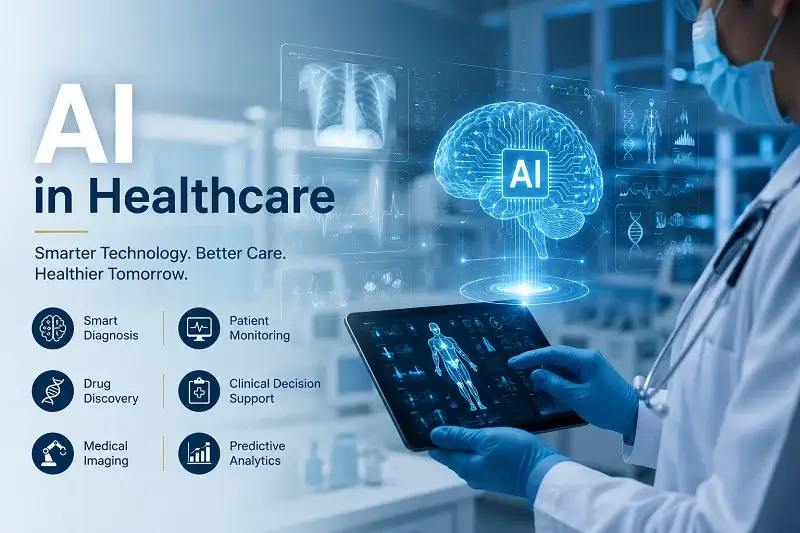
AI in Healthcare: Transforming Modern Patient Care
Artificial intelligence is one of the most important forces shaping modern healthcare. From faster diagnosis and medical imaging to drug discovery, remote patient monitoring, and hospital workflow automation, AI is helping healthcare systems become more accurate, efficient, and patient-focused.
As part of the wider Modern Healthcare https://neronpharma.pk/modern-healthcare/ transformation, AI is not replacing doctors, pharmacists, researchers, or healthcare professionals. Instead, it is supporting them with better data, faster analysis, and smarter decision-making tools.
What Is AI in Healthcare?
AI in healthcare refers to the use of computer systems that can analyze medical data, recognize patterns, support clinical decisions, and assist in healthcare delivery. These systems can process large volumes of information much faster than traditional methods.
AI may be used in:
- Medical diagnosis
- Medical imaging
- Drug discovery
- Clinical decision support
- Patient monitoring
- Hospital management
- Personalized treatment planning
- Healthcare data analysis
Why AI Matters in Modern Healthcare
Healthcare professionals deal with enormous amounts of patient data every day. Medical histories, laboratory reports, imaging scans, prescriptions, symptoms, and treatment responses all need careful evaluation.
AI helps organize and interpret this information more efficiently. When used responsibly, it can improve patient safety, reduce delays, support early diagnosis, and help healthcare providers make more informed decisions.
AI in Medical Diagnosis
One of the most valuable uses of AI in healthcare is diagnosis. AI systems can analyze symptoms, test results, and patient records to identify possible conditions and assist doctors in clinical evaluation.
This is especially useful for diseases where early detection is critical, such as cancer, heart disease, diabetes complications, neurological disorders, and respiratory conditions.
AI in Medical Imaging
Medical imaging is one of the strongest areas for AI adoption. AI can assist radiologists by reviewing X-rays, CT scans, MRI scans, ultrasounds, and mammograms to detect abnormalities.
AI tools may help identify:
- Tumors
- Fractures
- Internal bleeding
- Lung infections
- Heart abnormalities
- Neurological changes
These tools can support faster reporting and help reduce the risk of missed findings. However, final interpretation should always remain under the supervision of qualified healthcare professionals.
AI in Drug Discovery
Pharmaceutical research is another major area where AI is creating impact. Traditional drug discovery can take many years and requires extensive laboratory testing, clinical trials, and regulatory review.
AI can help researchers identify promising drug candidates, study molecular structures, predict drug interactions, and analyze disease mechanisms more quickly.
For pharmaceutical companies, AI has the potential to improve research efficiency, reduce development costs, and support the discovery of safer and more effective treatments.
AI and Personalized Medicine
Modern healthcare is moving away from one-size-fits-all treatment. AI supports personalized medicine by analyzing patient-specific information such as genetics, age, lifestyle, medical history, and treatment response.
This helps healthcare professionals choose treatments that are more suitable for each patient. Personalized medicine can improve treatment success and reduce the risk of unwanted side effects.
AI in Remote Patient Monitoring
Wearable devices and connected medical tools can collect real-time health data from patients at home. AI can analyze this data and alert healthcare providers if unusual patterns appear.
Remote monitoring may support patients with:
- Diabetes
- Hypertension
- Heart disease
- Respiratory illnesses
- Sleep disorders
- Post-surgical recovery
This allows earlier intervention and may reduce unnecessary hospital visits.
AI in Hospital Management
AI is also improving hospital operations. Healthcare facilities can use AI to manage appointments, predict patient flow, reduce waiting times, optimize staff schedules, and improve resource planning.
Better hospital management improves both patient experience and healthcare efficiency.
Benefits of AI in Healthcare
- Faster diagnosis
- Improved accuracy in medical imaging
- Better patient monitoring
- More efficient drug discovery
- Support for personalized treatment
- Reduced administrative workload
- Improved hospital workflow
- Earlier detection of health risks
Challenges of AI in Healthcare
Although AI offers major benefits, it also brings important challenges. Healthcare organizations must use AI carefully, ethically, and transparently.
Data Privacy
AI systems require access to medical data. Protecting patient privacy and securing healthcare records is essential.
Accuracy and Safety
AI tools must be tested properly before use in clinical environments. Incorrect recommendations can create serious risks.
Human Oversight
AI should support healthcare professionals, not replace medical judgment. Doctors, pharmacists, and specialists must remain central to patient care.
Ethical Use
AI systems should be fair, transparent, and free from harmful bias. Healthcare innovation must benefit patients safely and responsibly.
The Future of AI in Healthcare
The future of AI in healthcare is promising. AI will continue to support earlier diagnosis, smarter treatment planning, faster pharmaceutical research, and better healthcare delivery.
In the coming years, AI may become more common in smart hospitals, digital health platforms, medical research, preventive healthcare, and personalized medicine.
However, the most successful healthcare systems will be those that combine advanced technology with human expertise, compassion, quality, and patient-centered care.
Conclusion
AI in healthcare is transforming how diseases are diagnosed, treatments are developed, and patients are monitored. It plays a major role in the future of modern healthcare by improving accuracy, speed, efficiency, and personalization.
For pharmaceutical companies and healthcare organizations, AI represents an opportunity to strengthen research, improve patient outcomes, and support safer, more effective healthcare systems. As innovation continues, responsible AI adoption will become an important part of delivering better healthcare for future generations.
Frequently Asked Questions
What is AI in healthcare?
AI in healthcare is the use of artificial intelligence systems to analyze medical data, support diagnosis, improve treatment planning, assist drug discovery, and improve healthcare delivery.
How is AI used in hospitals?
Hospitals use AI for medical imaging, patient monitoring, appointment management, clinical decision support, workflow optimization, and healthcare data analysis.
Can AI replace doctors?
No. AI is designed to support healthcare professionals, not replace them. Medical decisions should always involve qualified doctors and healthcare experts.
How does AI help pharmaceutical research?
AI helps researchers analyze molecules, identify drug candidates, predict interactions, study diseases, and speed up early-stage drug discovery.
Is AI safe in healthcare?
AI can be safe when properly tested, regulated, monitored, and used under professional medical supervision.
Suggested Internal Links
Image ALT Text
AI in healthcare supporting modern diagnosis, pharmaceutical research, patient monitoring, and digital healthcare innovation.